Key Takeaways
• Collaboration must be intentionally designed, not left to chance or goodwill.
• Leadership evolves into influence, cultural fluency and ethical presence.
• Transparency, trust and coherence become the new operating system.
• Regeneration, reflection and rhythm are part of sustainable leadership design.
Core Message
Middle managers become designers of trust-based collaborative systems that enable coherence, belonging and innovation in fluid organisational ecosystems.
The future of middle management is neither about managing nor about the middle. It’s about connecting. In a world where hierarchies flatten and technology extends our reach, middle managers are emerging as the quiet architects of collaboration — the ones who hold the invisible threads that make organizations human, agile, and alive.
From Control to Connection
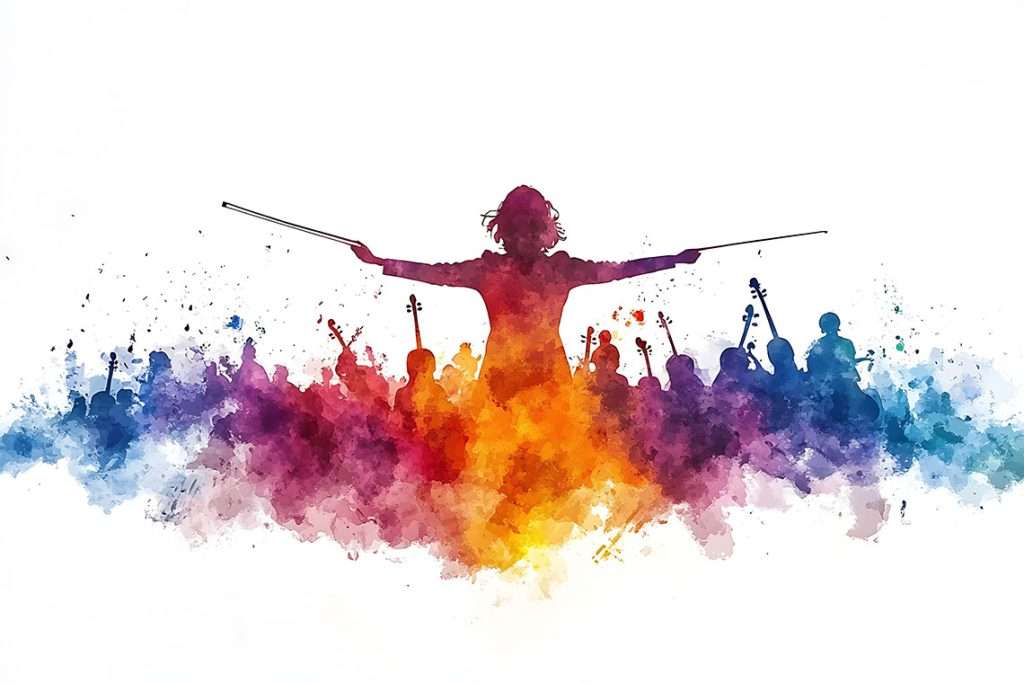
For decades, middle management was defined by coordination — by translating top-down strategy into operational action. But that model belongs to an era of predictability. Today, organizations move more like ecosystems than machines. The real work of leadership lies in orchestrating flow — of ideas, of energy, of trust. Middle managers now act as network orchestrators: sensing rhythm, balancing tension, and enabling connection across boundaries. They don’t just align people with goals — they align people with one another. Their impact is relational, not positional. They are the conductors of collective intelligence — creating harmony between humans, teams, and technology.
Designing Collaboration
Collaboration does not happen by accident. It must be designed — emotionally, culturally, and structurally. This is where the new middle manager steps in as an architect of collaboration. They build the architecture of trust. They create the communication spaces where people can think, feel, and disagree productively. They curate rituals that make hybrid work cohesive and human. They turn shared intention into shared practice.
These are no longer “soft skills.” They are strategic structures of belonging — the scaffolding that allows organizations to remain coherent while continuously changing.
The Inner Framework: Leadership, Influence, and Fluency
The foundation for this new role can be understood through the Leadfluencer framework — not as a title, but as a way of being. It weaves together three essential dimensions:
• Leadership – the capacity to inspire meaning and direction, to hold vision in the midst of volatility.
• Influence – the ability to create reach and resonance, not through hierarchy, but through authenticity and ethical presence.
• Fluency – the art of communicating clearly and connecting across contexts, cultures, and platforms.
At the intersection of these dimensions lies the modern middle manager: grounded, visible, and adaptive. Someone who can move gracefully between strategy and empathy, analytics and intuition, structure and flow.
Their leadership is not performative; it is integrative. They lead through tone, attention, and energy — the subtle yet powerful tools that define culture from the middle out.
Ethical Influence and Human Coherence
In an age where AI accelerates information and hybrid work disperses teams, the question is no longer how to manage productivity — but how to maintain coherence. Middle managers sit at the ethical and emotional core of this coherence. They model how influence can remain human. They remind organizations that trust cannot be automated. They ensure that communication still connects, that digital presence still feels like presence. They are, in essence, the ethical connectors — shaping how collaboration feels, not just how it functions.
Collaborative Intelligence: The Outcome
When middle managers orchestrate networks and design collaboration through leadership, influence, and fluency, something remarkable emerges: collaborative intelligence. A system that learns, adapts, and creates together — where communication becomes the bloodstream of innovation, and trust becomes its currency.
These managers don’t stand in the middle; they hold the middle. They stabilize complexity without freezing it. They create movement without noise. They transform the organization into a living network — one that breathes through connection.
In Essence
The new middle manager is the architect of connection and the designer of trust. They are fluent in emotion, ethical in influence, and visionary in leadership. They turn collaboration into a craft — intentional, human, and alive. And in doing so, they give the future of work its most essential quality: coherence in motion.
I love how my earlier thoughts and today’s insights weave together — the conversation between past and present never really ends. What New Forms of Leadership Are Emerging in the Middle?
The question of what leadership will look like in the future has moved — literally — to the middle. Between strategy and execution, between purpose and people, a new kind of leader is taking shape: not the controller of processes, but the orchestrator of connection. Not the boss, but the architect of collaboration. From Hierarchy to Human Systems Thirty years ago, we believed that leadership meant moving up — through titles, through status, through layers. Today, leadership moves across: between teams, networks, and cultures.
The middle is no longer a position; it is a function of coherence. In the 1990s, when I first explored the evolving role of middle managers in “Visionen für das mittlere Management”, I wrote that they were the “network managers” of the future — responsible for trust, communication, and flow between all levels.
Back then, it was a radical thought. Now, it’s simply reality. Organizations today behave like ecosystems — interdependent, adaptive, constantly reconfiguring themselves. In such systems, leadership is distributed, but connection is not accidental. It must be designed — emotionally, structurally, and ethically.
Middle Managers as Architects of Collaboration
The middle manager of the future is not the exhausted translator between conflicting demands. They are the designer of coherence. They listen across layers, sense tension before it turns into conflict, and transform disconnection into dialogue. They no longer hold power — they hold space: for reflection, feedback, and ethical influence. They align what systems think with what humans feel.
In this sense, middle managers are becoming the architects of collaboration — crafting the infrastructures of trust that allow autonomy and belonging to coexist.
Three Dimensions of Modern Middle Leadership
This transformation can be described through the Leadfluencer framework, which weaves together three timeless capacities:
• Leadership – to inspire direction and clarity in complexity.
• Influence – to reach across networks with credibility and ethical voice.
• Fluency – to move gracefully across contexts, languages, and generations.
Where these dimensions meet, collaboration becomes culture. Middle managers turn from coordinators into connectors — bridging meaning, not merely managing output. They make invisible dynamics visible. They lead through tone, not title.
Transparency, Trust, and the Courage to See
Already in the 1990s, I described “Transparenz schaffen” as the beginning of renewal. Back then, it was about feedback — the balance between selfperception and external perception. Today, transparency has become a moral principle: it builds the credibility needed for influence in a hybrid, uncertain world.
Transparency is not exposure; it is coherence made visible. It invites accountability without shame and dialogue without defense. It is what keeps organizations psychologically safe and ethically awake.
Change Agents and Coaches
The middle of the organization is where change actually happens — not in the PowerPoint slides of strategy meetings. Middle managers are the translators of transformation: they embody new values through everyday interaction. Their leadership lies in enabling others to act rather than directing them.
In 1995, I wrote: “Die Führungskraft als Change-Agent befähigt Mitarbeiter, aktiv mitzugestalten.” Three decades later, the sentence stands like a prophecy. Leadership is no longer about knowledge, but about creating learning systems — environments that nurture courage, creativity, and renewal.
The Network Mindset
The future belongs to network managers — those who navigate complexity without collapsing under it. The 1995 acronym still captures the essence of this mindset:
N – Neuerungen, Innovationen
E – Experten-Kompetenz verknüpfen
T – Teamfähigkeit fördern
Z – Ziel- und Kundenorientierung
W – Wissen sichern
E – Eigeninitiative stärken
R – Ressourcen optimieren
K – Konkurrenzvorteile übertreffen
This was, and remains, the blueprint for agile, self-steering organizations. Back then, it was called network management. Today, we call it collaboration design. The task, however, is the same: to make systems human again.
Regeneration, Reflection, and Rhythm
Leadership without pause burns out its own wisdom. Already in 1995, I proposed Sabbaticals — not as luxury, but as necessity. Periods of renewal allow perspective, creativity, and empathy to return. The same applies today.
Regenerative leadership — leading in cycles, not in straight lines — is the antidote to the exhaustion of endless transformation. Middle managers who can restore rhythm to their teams lead not just through results, but through resonance.
From Pressure to Purpose
If 1995 was the beginning of awareness, 2025 is the age of embodiment. Everything that was once theory — transparency, collaboration, coaching, ethical leadership — is now operational reality. Middle managers are not stuck in the middle anymore; they are shaping the middle. They stand where meaning is made — between vision and execution, strategy and emotion, human and system. They are not the forgotten layer; they are the living interface of the organization. And perhaps, after all these years, we can finally say what I hoped back then: It’s fun in the middle.
Essence
Middle leadership is no longer a transitional phase — it’s a transformational space. It is where trust, influence, and empathy turn complexity into collaboration. And where organizations rediscover that what makes them truly future-ready is not speed — but fluency.